Glossary
Immersive Experience
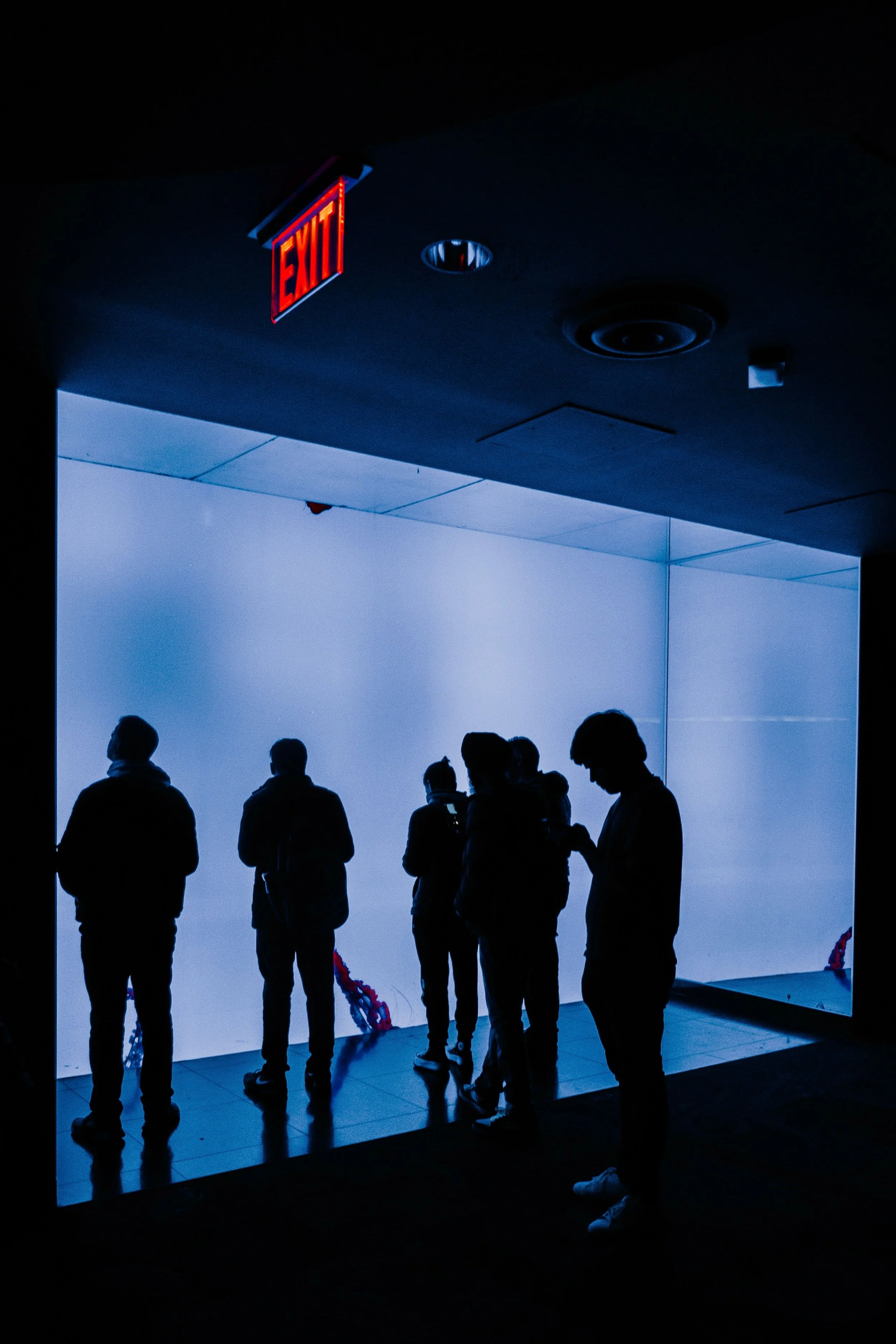
An immersive experience surrounds the viewer, through scale, projection, sound, or interactivity, while they physically step inside the work and become part of the staging itself. This goes well beyond the visual as many immersive installations combine large-scale imagery with spatial audio systems, tactile surfaces, vibration, and even scent. Storytelling often acts as the structural backbone that holds the whole experience together. Most spaces respond dynamically, reacting to a visitor's movement, touch, or simple presence in the room, thereby deliberately blurring the line between reality and illusion.
Contemporary immersive art owes much of its popularity to Yayoi Kusama's Infinity Mirror Rooms, ongoing since 1965, and to studios like teamLab, whose large-scale digital installations have made immersive, technology-driven environments a mainstream phenomenon. Today's artists build these spaces using tools like 360-degree projection mapping, VR, AR, and increasingly AI.