Glossary
AI Art
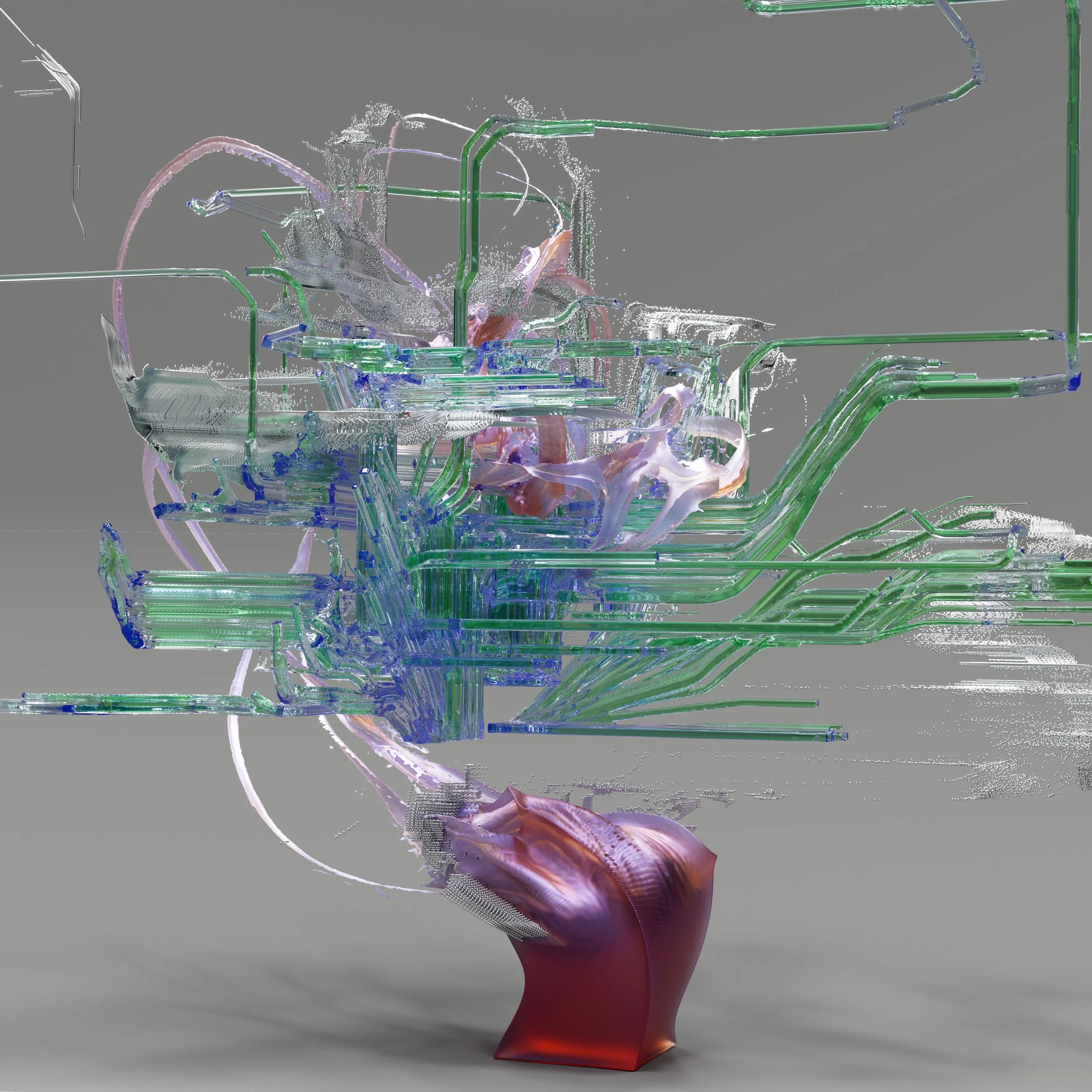
AI art uses machine learning models as part of an artist's process: training a model on a specific dataset, using AI to generate forms later translated into physical sculpture, or building custom neural systems as the artwork itself. It's best understood as a modern offshoot of generative art, with one key difference: generative art runs on fixed rules an artist writes directly, while AI art uses systems that learn independently from vast amounts of data, analyzing style, brushstroke, composition, and visual concept across millions of reference images to generate new patterns.
The lineage goes back to artist Harold Cohen who built AARON, an autonomous drawing program, in the early 1970s. That was one of the first serious attempts to make a machine an active creative collaborator. Today's tools mostly run on GANs (generative adversarial networks) or diffusion models, which build an image by gradually refining random noise into something recognizable. The artist's role shifts to precise creative direction rather than executing every mark by hand.
For collectors: Ask what the artist trained, built, or modified, versus who simply typed a prompt into an off-the-shelf tool. That distinction is where real practice separates from novelty.